Persian Door - 7&8 March 2026
Sale price
Price
£35.00
Regular price
Unit price
per
Carved Geometry: Persian Door
Online Practical Drawing Workshop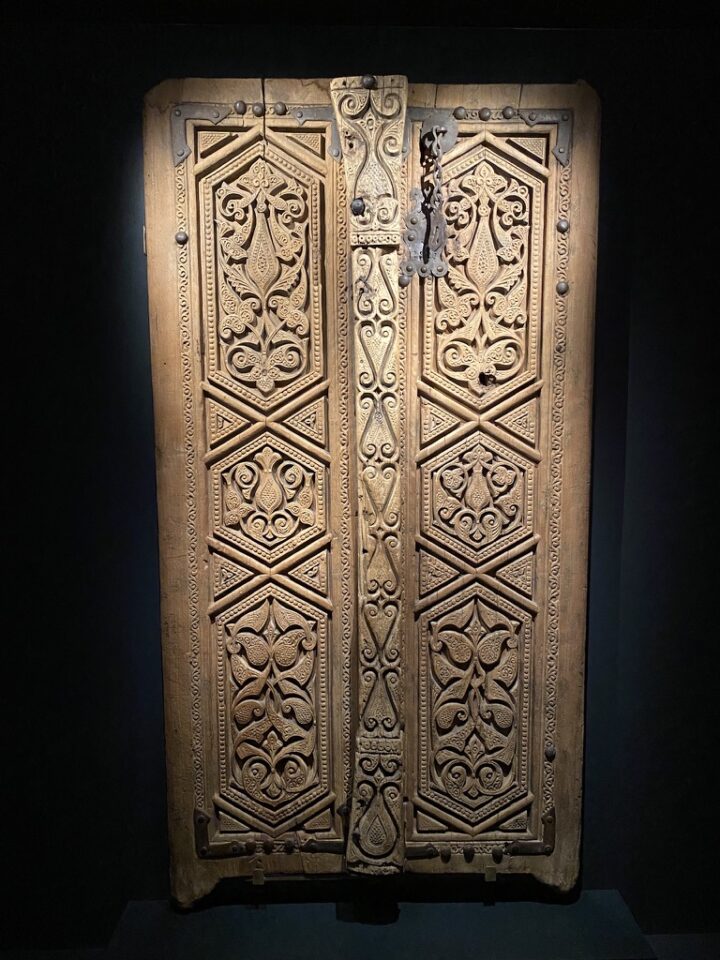
7&8 March 2026
3:00–5:00 pm (UK time)
Register Here
10% fees for online classes go to unicef’s children-in-gaza-crisis-appeal
All classes finish before UK Iftar
Come and draw this exceptional wooden artefact, and leave with a richly developed, fully rendered study that captures its geometry, carved detail, and three-dimensional depth.
In this two-day workshop, we will study and draw the deeply carved wooden door panels of a remarkable 12th-century Persian door, exploring how geometry, structure, and foliate ornament are woven into architectural woodwork.
Working from historic reference, we’ll analyse the panel system — where hexagonal compartments form the geometric framework, each filled with richly carved half-palmette arabesques, scrolling tendrils, and layered vegetal forms. These compartments function like miniature ornamental worlds, contained within a larger architectural grid.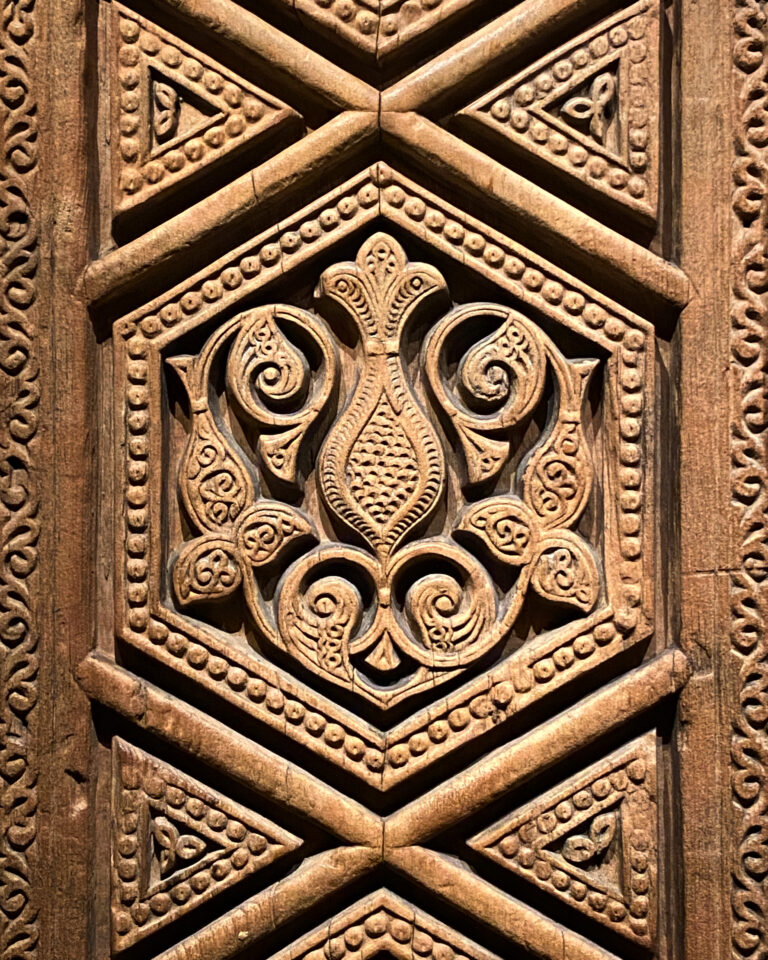
Stylistically, this work sits within the lineage of the Abbasid Samarra vegetal tradition, first seen in 9th-century stucco carving in Iraq, where abstracted vine scrolls and beveled leaf forms created flowing ornamental surfaces. By the 12th century in Iran, under Seljuk patronage, this language evolved — becoming more architectonic, with vegetal carving contained inside geometric compartment systems such as the hexagonal fields seen here.
Material & Carving
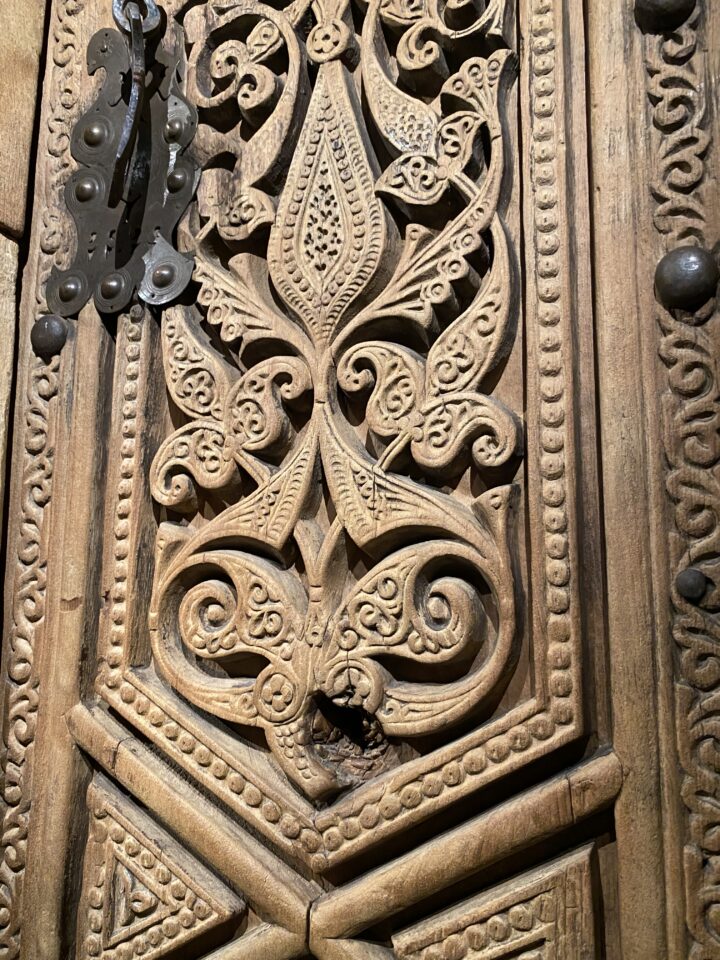
Unlike the earlier Samarra stuccoes, these doors were carved in hardwood — often walnut or teak — allowing for deep relief carving, undercut shadow, and sculptural surface modelling. The ornament is chiselled in layers, with bevelled leaves, drilled details, and flowing scrolls designed to catch light across the surface.
Day One — Geometric Framework & Panel Construction
We begin by mapping the underlying structure of the door: its vertical divisions, framing bands, and the hexagonal compartment system that organises the ornament. You’ll construct the full panel layout, learning how proportion, symmetry, and repetition create architectural balance.
Day Two — Foliate Ornament & Carved Depth
Building into the compartments, we’ll draw the flowing half-palmette arabesques, scrollwork, and vegetal infill that animate the geometry. We’ll explore lineweight, relief carving logic, and shading techniques to evoke the depth of chiselled wood.
-
Construct hexagonal panel frameworks within architectural fields
-
Draw half-palmette arabesques and scrolling vegetal ornament
-
Understand the Samarra-derived roots of Persian arabesque
-
Integrate foliate motifs within geometric compartments
-
Apply shading to suggest deep carved wooden relief
All levels are welcome — from beginners to experienced artists, designers, and craftspeople. The class is taught step by step, guiding you through structure, ornament, and refinement.
Across the two sessions, you will complete at least two finished panel drawings — one from each day — alongside a deeper understanding of how geometry, carving, and vegetal abstraction combine within Persian architectural design.
A full recording of both sessions will be provided, giving you lifetime access to revisit and develop the work further.
Reference Artwork
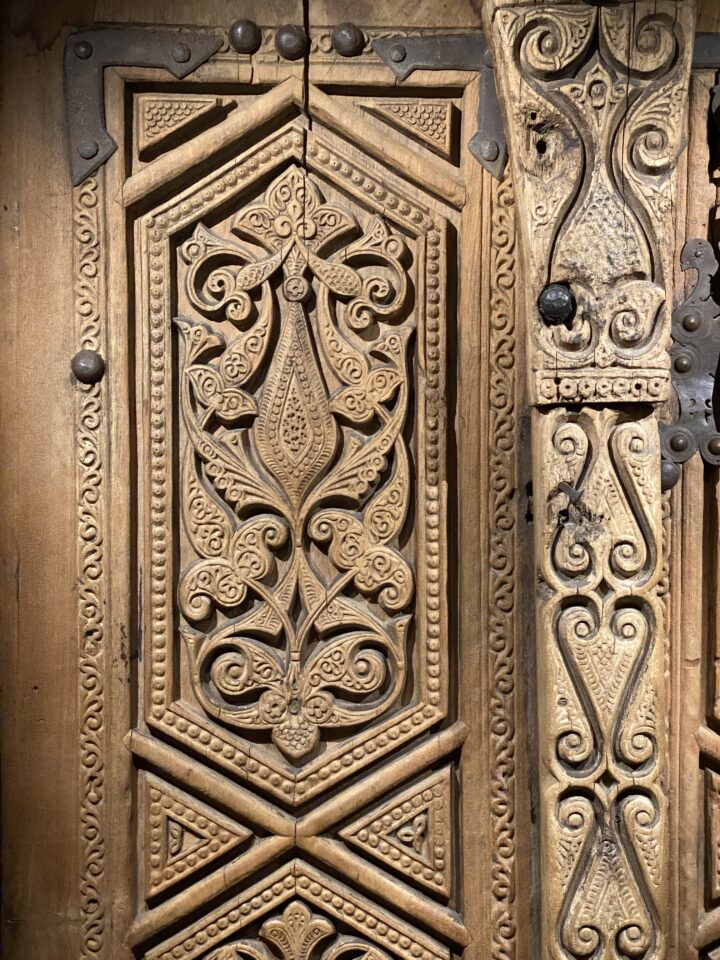
Wooden door, the panels deeply carved with hexagonal compartments filled with foliate half-palmette arabesques, their surfaces further detailed with scrolls and geometric patterns.
Iran, AH 6th century / 12th century CE
The al-Sabah Collection, inv. no. LNS 3 W a–c
A full recording of both sessions will be provided, giving you lifetime access to revisit the process and continue developing your work.
- Practical drawing class with a short introductory lecture
- All abilities welcome (no drawing experience required)
- Please arrive on time so the step-by-step progression is clear
- Downloadable recording
These online presentations are taught by Adam Williamson, inspired by his studies and travels.
Required Materials
- Compass
- Ruler
-
A3 or A2 drawing paper
Mid‑tone paper is recommended (grey, tan, or natural craft). However, alternatives are encouraged, including hand‑tinted, coloured, or marbled paper, all of which create beautiful grounds for highlighting. - White pencil
- Graphite pencils: 3B–HB range
- Tracing paper
- Zero eraser / precision eraser (or equivalent)
Optional (useful but not essential):
Fine‑line drawing pens (0.1–0.5)
After registering, you will receive a confirmation email from wetravel with the zoom joining instructions.
We will also send an email before the class with materials to look over in advance, along with the Zoom passcode for joining the session on Saturday.
If your country does not support PayPal, please use the link Alternative registration option or email: adamzoomclasses@gmail.com
This course will take place on Zoom, so please download the free Zoom app beforehand.